Nice Guys Finish First
Wout van Aert can do everything on a bike. Sprint, climb, time trial, cobblestones, crosswind, rain. He’s the guy teams build around and the guy who builds the team around someone else. Depends on the day. Depends on what’s needed.
He’s won stages at every Grand Tour. He’s led the Tour de France. He’s been on the podium at World Championships. On paper, that’s a career. A great one. But paper doesn’t know the full story.
The full story is that he was born in the wrong era.
Tadej Pogačar races like the sport has different rules for him. Mathieu van der Poel rides like he’s settling a personal argument with the road. They’re not cyclists. They’re anomalies. Generational talents that showed up in the same generation, which is a cruel thing if you happen to be the third-best rider alive.
That’s Wout. Third-best rider alive. Which, in any other decade, would make him the best.
He doesn’t talk about it. That’s the thing. He doesn’t give bitter interviews. He doesn’t hint at what could’ve been. He pulls at the front for his team leader until his legs are empty, then he congratulates whoever won. He smiles. He means it.
He’s had the crashes. The injuries that come at the worst time. The mechanical failures on the wrong cobblestone sector. The races where everything goes right for forty kilometers and then doesn’t. You’ve seen it. If you follow cycling, you know exactly what I mean. If you don’t, just know that bad luck finds certain people more often than probability should allow.
And he keeps showing up. Same smile. Same work.
Then Paris-Roubaix happened.
I’m not going to describe the race. It doesn’t matter how he won. What matters is that he did. Wout van Aert won Paris-Roubaix, and if you were watching, you already know what it felt like. If you weren’t, I’m not sure I can explain it.
There’s a phrase people use. Nice guys finish last. It’s one of those things that sounds like wisdom but is really just an excuse. A story people tell themselves to justify not being kind, or to explain why kindness didn’t pay off for someone else.
The world mostly rewards the loudest. The most ruthless. The most willing to take without asking. That part is true. But sometimes the kind, quiet, hardworking person wins. And when that happens, something breaks open.
You feel it in your chest. Not because of the race. Because of the proof.
Proof that the world is not built only for people who don’t care about others.
The psychologist Jonathan Haidt has a word for this. He calls it elevation — the emotion you feel when you witness someone doing something morally good. Warmth in your chest. A desire to be better. He says it’s the opposite of disgust. I think he’s right.
It’s not naivety. I know how things usually go. But that’s exactly why it matters. The rarity is the point. If nice guys won every time it wouldn’t mean anything. It means something because they almost never do.
Wout crossed the finish line and I thought about every person I know who does things right and gets nothing for it. The coworker who helps without keeping score. The friend who always shows up. The people who could be louder, sharper, more strategic about their kindness — but choose not to, because that would make it something else.
They don’t finish last. Not always. Sometimes they finish first.
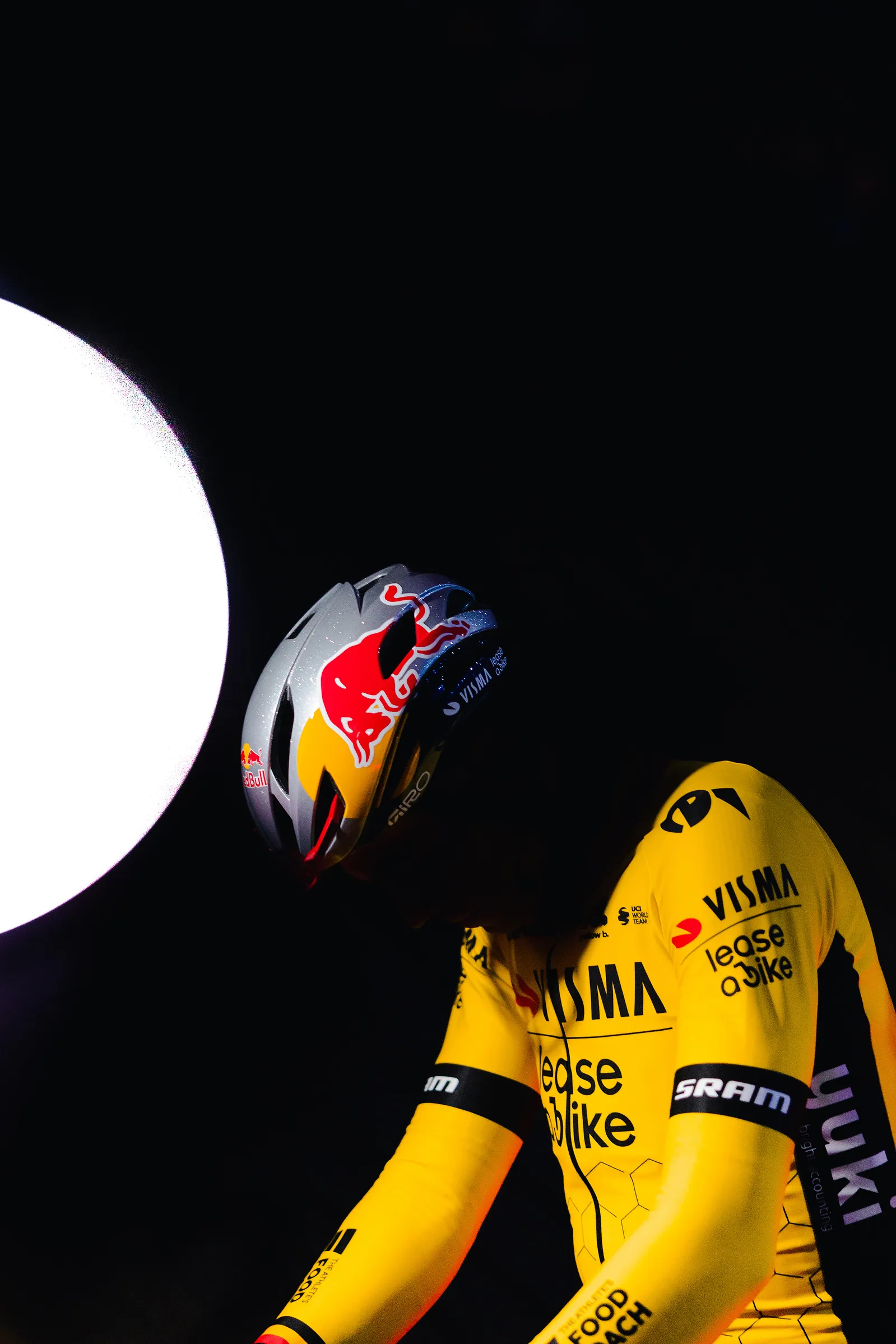
Photo: Visuals of Harry.