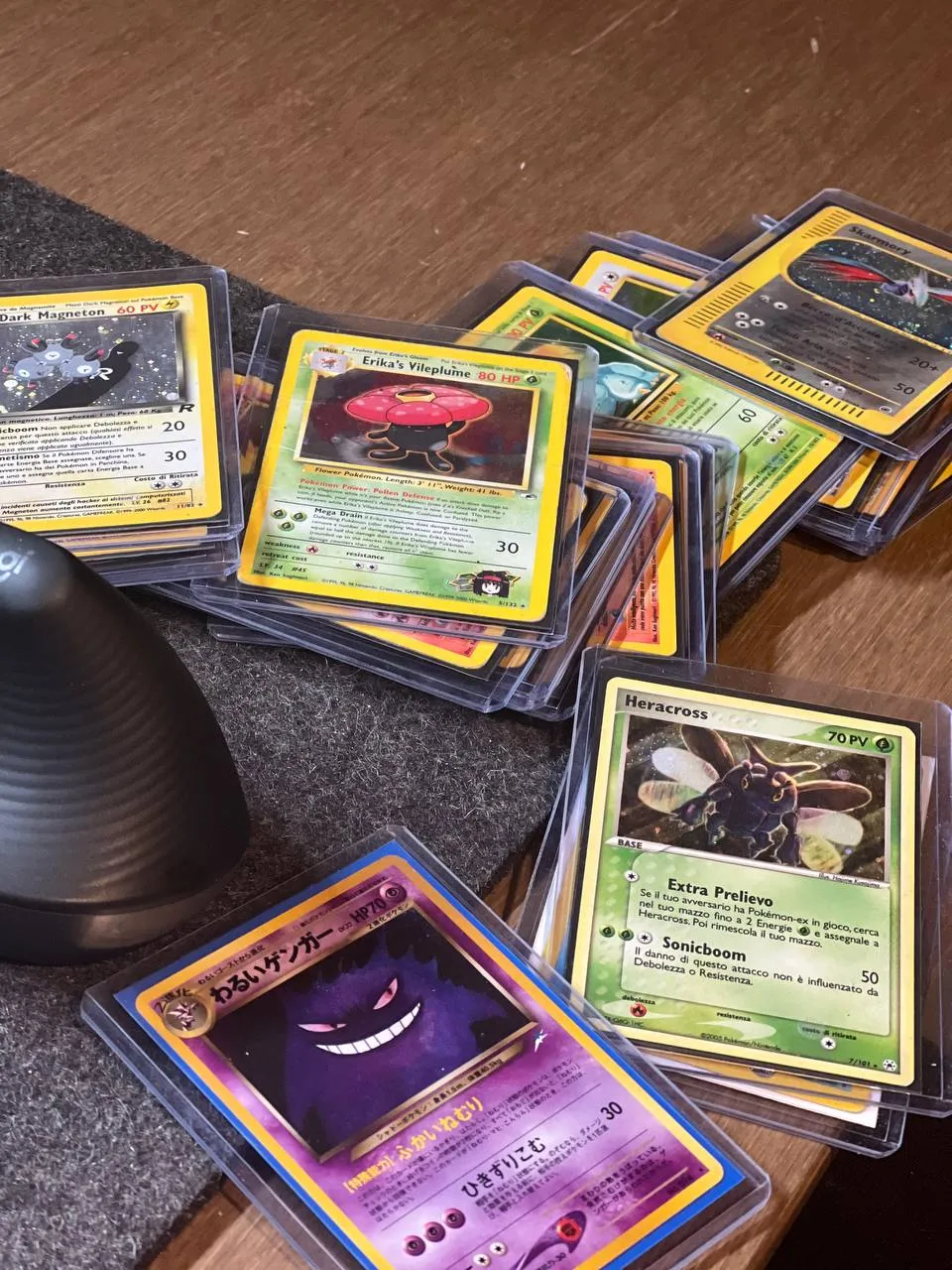
6.3 by 8.8
My brother is seven years younger than me. That’s a lot when you’re kids. Different schools, different friends, different everything. But we had cards.
We’d sit on the floor and open packs together. Sort them by type, by set, by whatever system made sense that week. Trade duplicates. Argue over who got the holographic. The usual. We did this at home, at our grandma’s place in the countryside, on the back seat of the car. Didn’t matter where.
We knew which Pokémon could learn Surf and which ones were just filler in your party. We shared a Game Boy — I played, he watched, because I was the older one and that’s how it worked.
We cared about the creatures. That was the whole thing. The craft behind the cards — we didn’t see any of that. We just thought they were beautiful, which is the same thing, if you think about it.
You can’t talk about any of this without Ken Sugimori. He designed the Pokémon. Not just illustrated them — designed them. Every shape, every proportion, every expression. He’s the reason a Blastoise looks like a Blastoise.
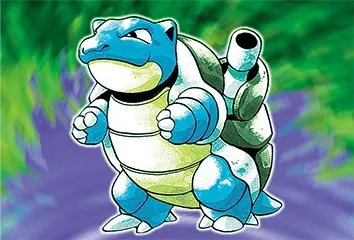
His stuff belongs to the same era as tape cassettes and CRT screens and Saturday morning cartoons. When you see one of his watercolors now, decades later, the feeling hits you before you can name it.
Then there’s Hyogonosuke. His cards feel like stills from a Miyazaki film, and that’s exactly how I feel when I look at them.
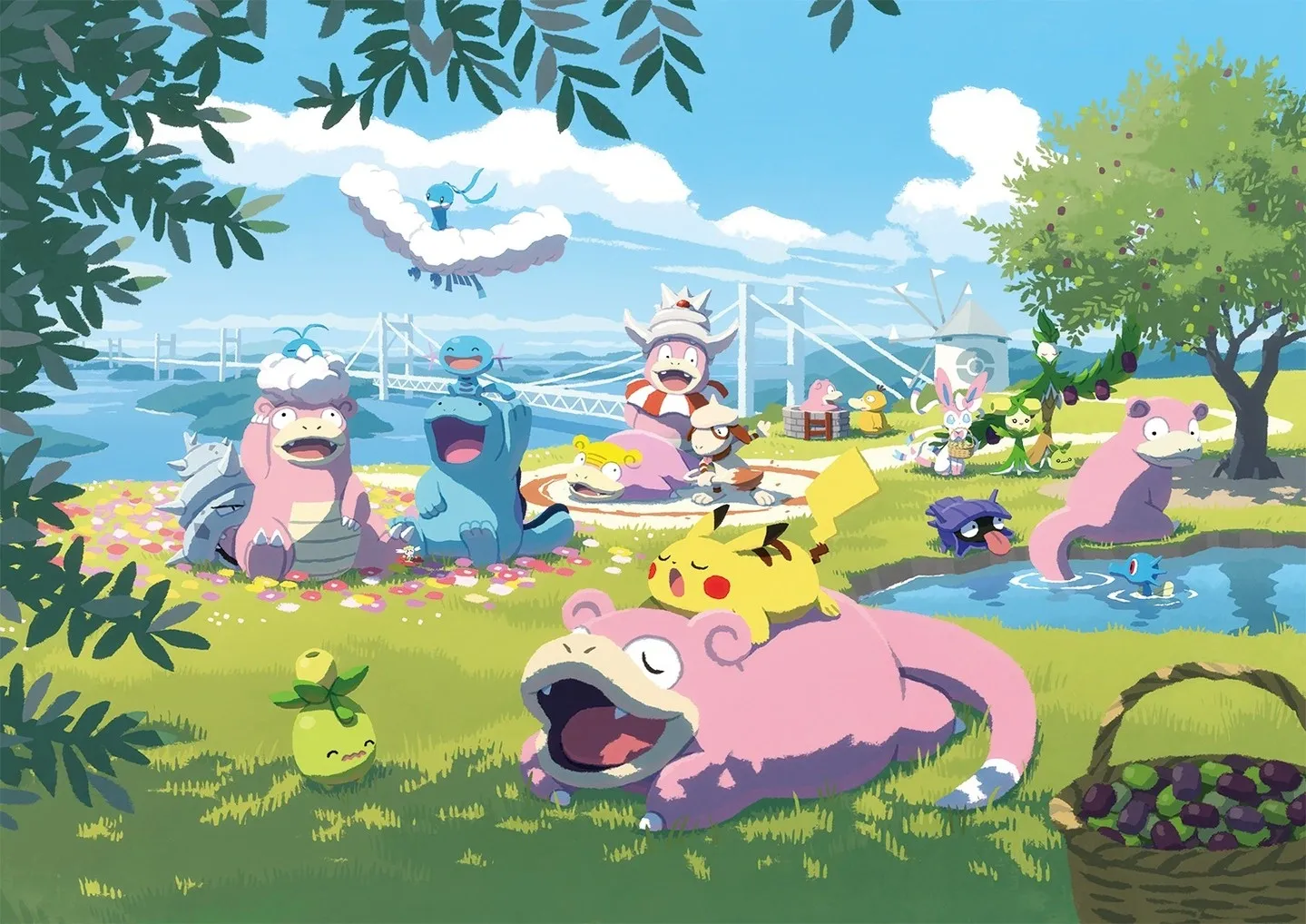
His cards remind me of my grandma’s countryside. The same light, the same quiet. That feeling of being somewhere where time moves differently.
And then there’s Tomokazu Komiya.
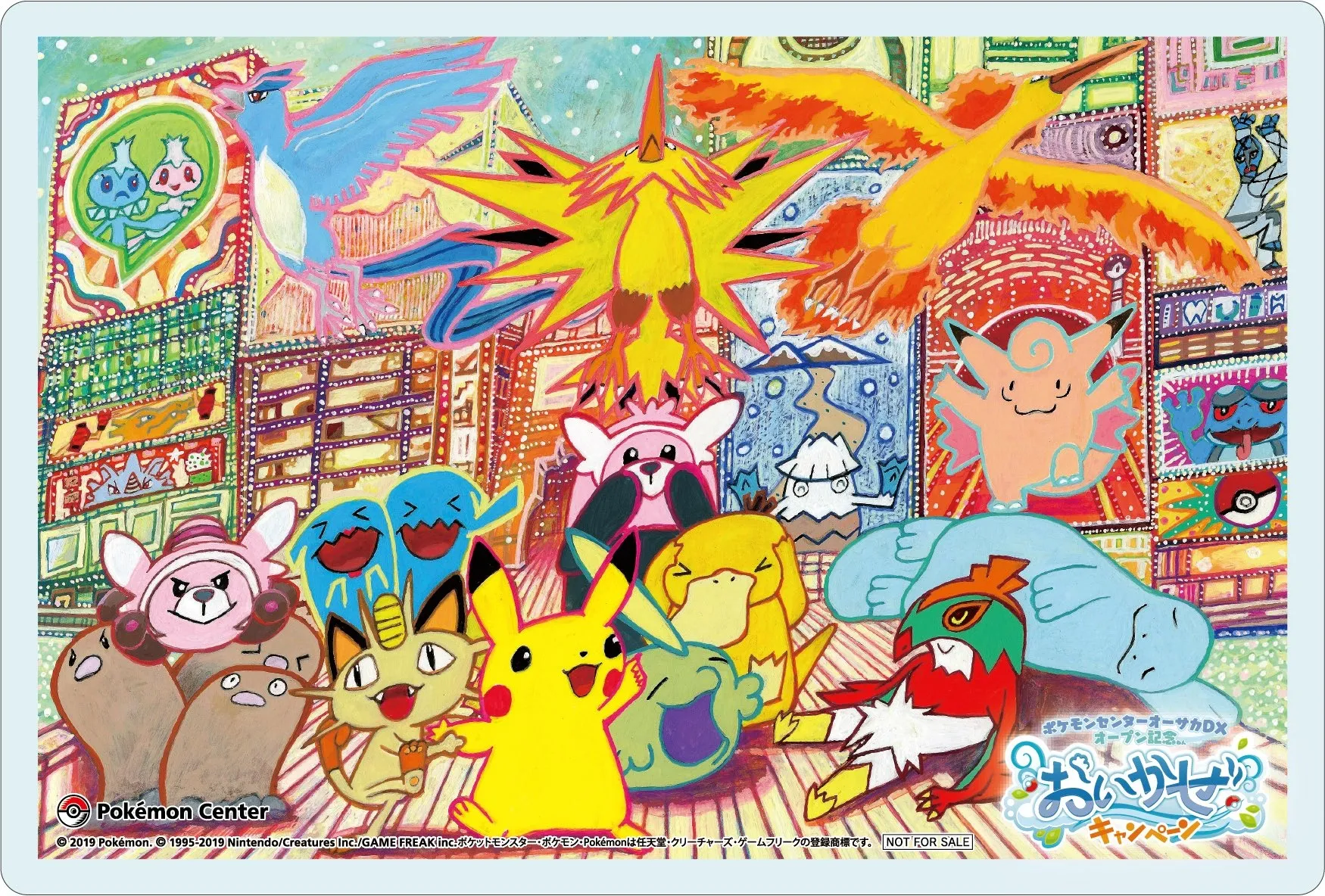
His stuff doesn’t play by the same rules. Everything’s a little off — the colors, the angles, the whole mood. You can’t stop looking.
A younger me would have found his art weird. Now I’m convinced it’s the most daring work in the entire TCG.
I stopped for years. Didn’t think about cards at all. They sat in a box somewhere at my parents’ house, between old school notebooks and things you keep without knowing why.
Then Laura and I started collecting again. She got it right away — not just the nostalgia, but the art. We’d open a pack and stop at a card not because it was rare, but because someone had painted something beautiful on it.
That’s when it clicked. These aren’t game pieces. They never were. They’re small commissions given to real illustrators who brought real vision to a 6.3 by 8.8 centimeter rectangle.
I came back for the nostalgia and found the art. Turns out they were the same thing all along.